Sunday, 18 January 2015

Weight loss update 2

Two new milestones today:
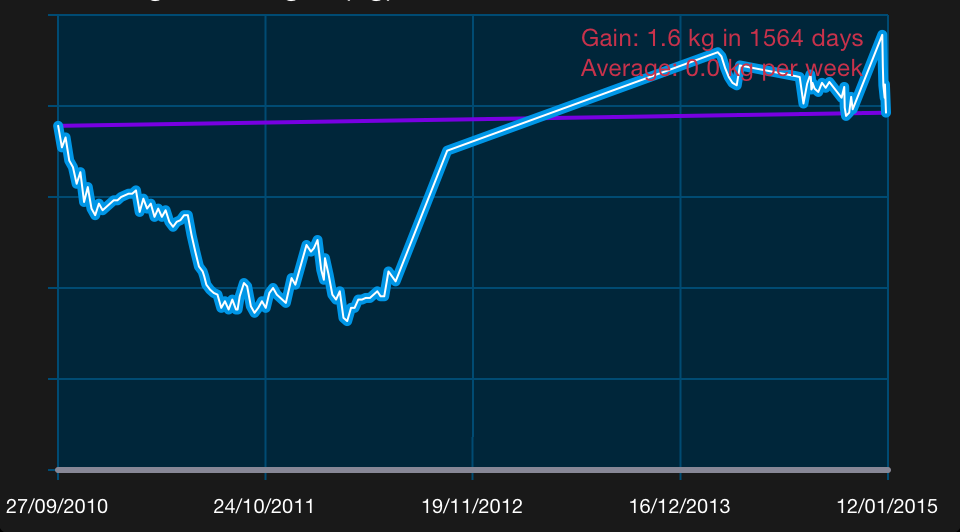
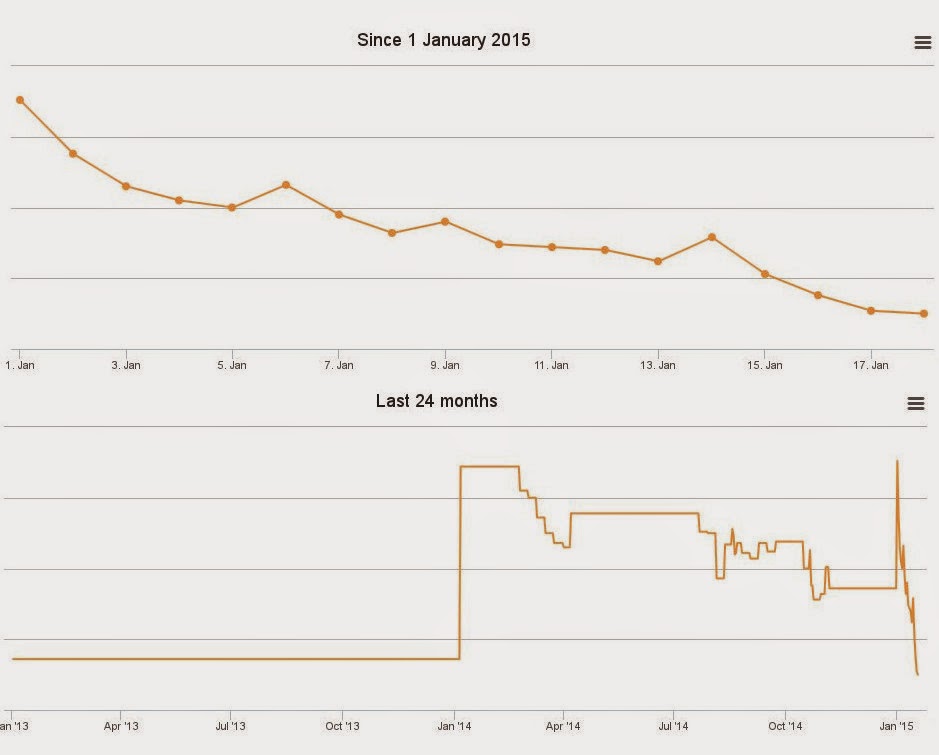
  • I have now lost 15 kg since 1 January (top graph)
  • I am now (just, barely) lighter than I have been at any point in the past 24 months (bottom graph). (Probably, anyway. I didn't weigh myself at all during the course of 2013, but I'm lighter than I was at my last data point for 2012, and it seems very unlikely that I could have lost weight unintentionally between then and the next data point in January 2014).


Divisions on both graphs represent 5-kg intervals.

A special mention here to the Highcharts Cloud tool — I really like the look of their easy-to-make yet highly customisable charts. The tool has social media sharing built-in too. Nice!


Saturday, 10 January 2015

Weight loss update 1

Just a quick update today to note passing two milestones of which I'm proud:
  • The first 10 kg lost (10.2 kg, top graph)
  • That I'm now (just, barely) lighter than I have been at any point in the past 12 months (by 0.4 kg, bottom graph)


In both graphs, the divisions on the vertical axis represent 5 kg intervals.

Friday, 9 January 2015

2015 project -- Lose (a lot of) weight


This year, my project is to lose a lot of weight. Specifically, I want to lose about a third of my body weight. My motivation is, over-ridingly, vanity, and I'm not ashamed to say so. I'm very unhappy with the way I look, and I mean to fix that. Of course, I know that there are many other benefits to me and my family if I lose weight, but as important as I think these benefits are, they are intellectual beliefs that I find more difficult to translate into motivation and action than ridding myself of a bad feeling: my embarrassment at the way I look.

This is a battle I've been having, on and off, for decades, ever since I was that fat nerdy kid at school who got bullied a lot, much of it targeted at my weight. The essential problem has two aspects to it:
  • The foods I love most have a very high energy density. I love sweet things, I love oily things. I also love convenience, which leads me to highly processed foods.
  • I have yet to discover the sport or form of physical recreation that appeals to me in the slightest. All of my favourite ways to relax or have fun are entirely sedentary. If I could be wired up to sufficient sources of information, I think that being a brain in a jar might be pretty cool.
So, my approach is to fight both these natural inclinations and to boost my physical activity and decrease my energy intake. As usual for me, I'm pursuing this very aggressively. The factors in my favour include that I can be very  stubborn, and that I don't get bored with routine. Another important weapon I have is that I am easily able to ignore feelings of hunger. Against me is the fact that because I don't actually enjoy what I'm doing here, I rely entirely on routine to keep me going. The upshot of that reliance is that if the routine is disturbed or disrupted in any way, the whole thing falls apart.

Physical activity:

To address the first part, I'm going to the gym every day to do 40 minutes of cardio (on treadmill and elliptical machine) and 20 minutes of resistance training on various upper-body machines. Because I'm so reliant on routine, I need to make sure I do this at a time of day where I'm never going to be disturbed, so I'm waking at 3:00AM to be at the gym from 3:30AM to 4:30AM and home by 5:00AM. To accommodate this, I'm getting to bed earlier. I aim for 9:00PM, but in practice it's usually somewhere between 10:00PM and 11:00PM.

Past experience shows me that this has to be daily, or the routine doesn't stick. I use a gym because, although I've had good results from just walking for an hour or two a day, if rain disrupts the routine for a couple of days, it's gone. Similarly, when I've worked with exercise physiologists in the past, they've assured me that I would get better fitness results from not doing resistance training every day, or from varying my exercise routine from day to day. I'm sure they're right. But I'm equally sure that the question is academic if it ends up with me not doing anything at all. It seems that I can form a pattern more easily around "I'm here at the gym; these are the five machines I must use" than around "I'm here at the gym; these are the three machines I must use because it's Tuesday."

Reducing intake:

On the other side, I'm reducing my calorie intake to practically nothing. By "practically nothing", I mean around 300 calories per day, which should be about what I'm burning in the gym session. Just enough to take in a few nutrients and to keep my gastro-intestinal apparatus running.

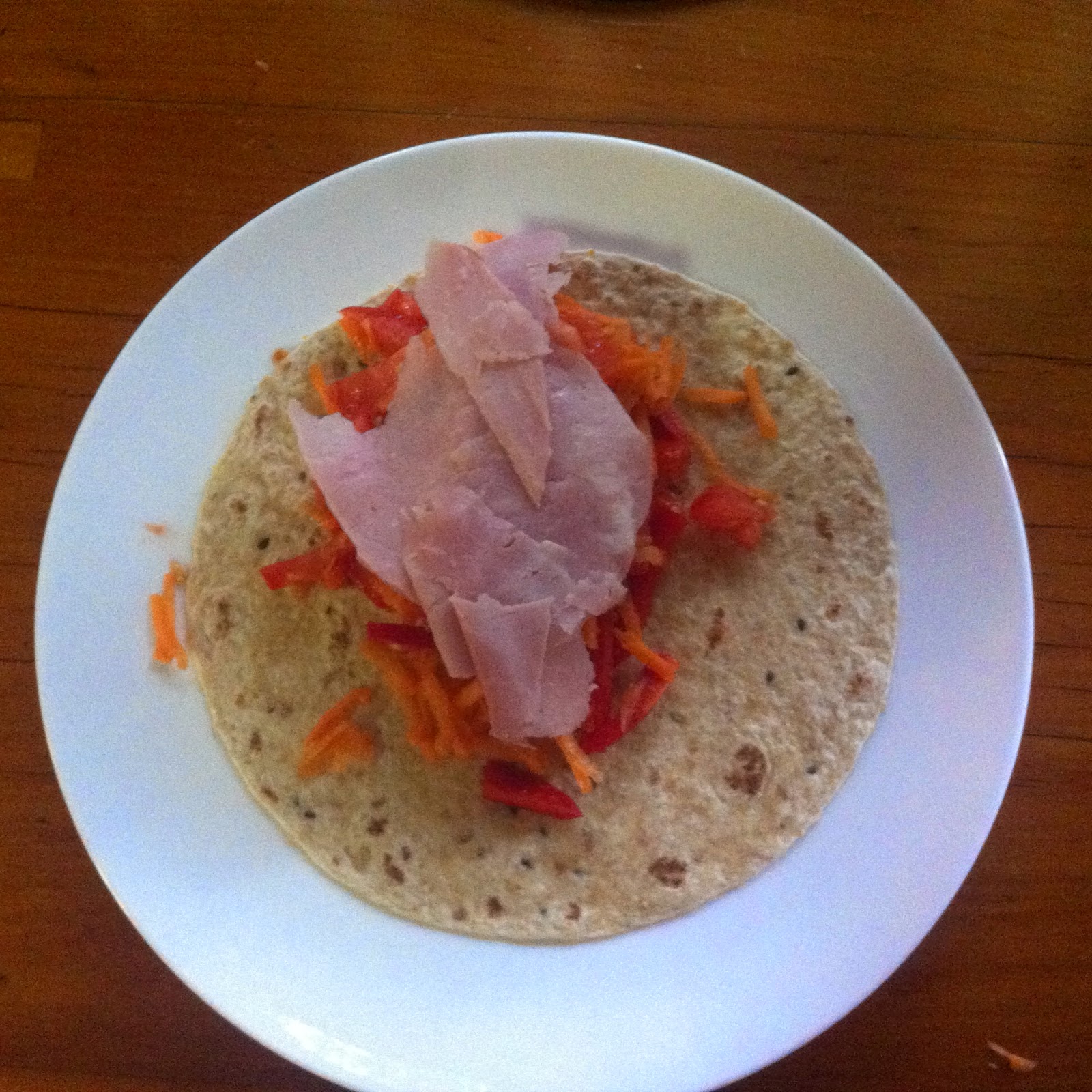
Again, to capitalise on the power of routine, I just eat practically the same thing every day. I have one meal a day, in the evening, which consists of a piece of flat bread wrapped around some salad and some ham or salmon.

An entire day's food intake for me in 2015 looks like:


I've had my resting metabolic rate measured in the past, so I know it to be close enough to 2500 calories/day to make the maths neat. With a net calorie intake of about zero and one pound of body fat equal to about 3500 calories, I'd expect to lose around 2½kg per week like this. (I know that weight loss doesn't work to as simple a formula as this. It's a ballpark number.)

I'm also conscious that food does have an important social function too! And so I will occasionally allow myself a treat at a social gathering (as I did last Sunday). My goal in those cases will still be to keep net energy intake for the whole day below 1000 calories. Tonight is games night, so I'll be treating myself to a few sushi rolls in place of my wrap. Yay!

Weight loss at the start of a diet is very rapid due to losing a lot of water. In the first week of 2015, I lost 8.1kg with the method described above. Now, I don't for a minute expect this rate to continue, but it is certainly a very pleasing start! :)

Physically, I already feel a difference in the fit of my clothes, in my posture, and in the flexibility of my joints. Psychologically, as in the past when I've been on extremely restrictive diets, I am experiencing a heightened sense of alertness. I also seem to notice smells more. (Past experience shows me that beyond this lies a kind of euphoria and a kind of floaty, out-of-body feeling, but I'm not there yet).

And as for the long term? I know I can't exercise like this and eat like this indefinitely. This regime isn't designed or intended for that. I also know from repeated past experience that when I come off an extreme diet, I very quickly revert to my sedentary lifestyle and mostly indiscriminate eating. This is a graph of my weight between late September 2010 and today:


A few key features:
  • The lines along the vertical axis represent around 10kg, so over the last four years, my weight has varied by about 30kg, and I'm presently close to the top of that range. Indeed, on 1 January 2015, I weighed more than I've ever recorded in my life. Note however, that there's four years along the horizontal axis, so it's not like I can gain or drop 10kg overnight. (That might take weeks!)
  • The long, featureless, upward slopes between late 2013 and mid 2014 are times when I was paying no attention to my weight at all, so no weigh-ins and no data. 
  • The instances of jagged upward drift were me trying to adhere to "sensible, healthy, everything-in-moderation" eating. I haven't been able to get this to work for me.
  • The slow downward slope through much of 2014 was me experimenting with a 5:2 diet that seemed to work for me for weight maintenance or very gradual weight loss. 
  • The big spike at the end of 2014 was when the 5:2 diet went away completely during the festive season of eating whatever I wanted. I can put on a lot of weight very quickly! (but then again, I can also take it off quickly).


So, it seems likely to me that even if I succeed in reaching my target with these extreme measures, the upward trend will set in again almost immediately. I don't really know what I'll do at that point, but it seems to me that the long-term strategy might be to shorten the cycles of weight gain and loss, so that I embark on these extreme measures sooner, at a lower threshold weight. Anyway, that's for the future.

I'll post updates to this blog to document how this attempt goes.


This blog post uses a mix of English and SI units. "Calories" here are "dietary calories" which are really "kilo-calories". People who want kilojoules, just multiply the numbers by four. Americans and Liberians who want pounds instead of kilogrammes, multiply those numbers by two. In both cases, you'll be "close enough" for the precision expressed in the numbers.


Thursday, 1 January 2015

My favourites and least favourites of 2014

Here’s a round-up of the things I liked and the things I didn’t in 2014:

Books

Per Goodreads, here’s a list of what I read in 2014. I only got through 41 out of the 50 books that I had challenged myself to. Among them were three books that I absolutely loved: Dahlgren, The Fiftieth Gate: A Journey Through Memory, and Colorless Tsukuru Tazaki and His Years of Pilgrimage. Of these, I was amazed by the first two books as much as anything that I’ve ever read, and being so very different, I find it impossible to chose a favourite between them. Dahlgren is a long piece of surrealist paranoia that is experienced as much as it is read. My Goodreads review of it here. I found it to be one of those books that stretched my understanding of what an author could do with a text. The Fiftieth Gate: A Journey Through Memory is a work of memoir that touches one of the darkest chapters of human history, but also explores really complex ideas of memorialisation and of ownership of the past. I haven’t read many books that I have found both emotionally wrenching and intellectually stimulating. This is such a book; my Goodreads review is here.

The book I enjoyed least was Insites: The Book, which I didn’t even finish reading (very rare for me). I found it utterly vapid: my review is here. Other books from which I derived no pleasure this year were David Vann’s Goat Mountain [review] and, astonishingly to me, Stephen King’s The Gunslinger [review].

Live music

I didn’t get out much in 2014, and so I don’t have much to discuss here. I think I only made it to two performances! I enjoyed both of them: The Audreys touring their new album, ’Til My Tears Roll Away, and Early Music Queensland’s programme of late baroque music, Musicalischer Circul. Obviously two very different shows! However, the Audreys performed with a polish absent in the other show, and I enjoyed theirs more.

Albums


I didn't listen to much new music in 2014 either, but I liked ’Til My Tears Roll Away more than anything else I heard. It does fall squarely into the “more of the same” category from The Audreys rather than explore anything new, but because I happen to like the sound of their previous albums so much, I’m perfectly OK with that!

The big disappointment for me was Ella Hooper’s solo debut, In Tongues. This was a surprise, since I liked Killing Heidi and The Verses so much. It was a shock to discover that there wasn’t a single track on this album I could connect with. 

Theatre

I only saw two plays in 2014: Queensland Shakespeare Ensemble’s The Tempest, and La Boite’s production of Kathryn Marquet’s Pale Blue Dot. I find it impossible to choose between these: one is my favourite of Shakespeare’s plays, performed with the tremendous energy and enthusiasm that QSE always brings to their work, and the other was a delightfully nutty yet thoughtful piece superficially about alien abduction, but really more about belief and trust. Both were outstanding.

Movies

The eight movies I watched in 2014 make it perhaps the leanest year for film for me in decades. This was mostly through not having easy access to Apple TV for a large chunk of the year, my main movie- and TV-watching platform these days. Out of what I saw, the highlight was very definitely The Cabin in the Woods, which I enjoyed for its cleverness and Whedon’s evident love of his material. This latter element is something I find lacking in so much mainstream film and is one of the things that draws me to low-budget, amateur film so much. My review is on IMDb.

The film I liked least in 2014 was Interstellar. To explain why, I’ll just recycle the summary I wrote for my IMDb review: I found it to be a film of interesting images, breathtaking visuals, and little consistency or sense.

TV

Early in the year, I heard a lot of buzz around True Detective, and although it very much sounded like not my thing at all, I gave it a try and loved it! Partly, I was drawn to the show’s brooding intensity and bleakness, but there was another element that elevated it to becoming one of my favourite pieces of TV ever. That element is a major spoiler, so I won’t discuss it here, but will instead direct curious readers to my review on IMDb. I'll also mention Broadchurch as another show that defied and grossly exceeded my expectations (and to which I also gave a ten-star rating on IMDb).

In 2014, I continued to sample a wide range of TV in search of new things to enjoy from the last 20 years or so that I’ve been mostly tuned-out to television. Predictably, this turns up a lot more misses than hits. The low-tide mark for my enjoyment of a show during the year was that time I sampled two excruciating episodes of Bob’s Burgers. I have absolutely no idea why so many people find this funny.

Computer games

I played only two computer games in 2014: Papers, Please, and Qwirkle. I really liked the idea and implementation of Papers, Please and could imagine myself getting quite addicted to it, given the opportunity. I haven’t invested the time to discover if that’s actually true though. Qwirkle is a computer implementation of an award-winning boardgame, but I’ll mention it here because I’ve only sampled the computer version. I like it a lot and am definitely addicted. Like most of the board games I enjoy, its mechanics make it appear deceptively simple, but there’s deep strategy to the game that I am very much still learning.

Role-playing games

After a long time, I liked the opportunity of trying out a couple of new games this year. My favourite (of a field of two!) was definitely the new, 5th edition of Dungeons & Dragons. (Note that “editions” of D&D are largely new games with fundamentally different and incompatible sets of rules.) I documented my initial reactions to the game elsewhere in this blog, and I’m glad to report that my positive impressions have persisted as I’ve continued to play it. I like this better than any edition of D&D since 2nd ed in 1989.

I’m less sold on Trail of Cthulhu. This game features a computer-game-like mechanic of ensuring that before leaving a scene in the story, the player-characters always receive the clue that will advance the plot to the next scene. I understand (and relate to!) the problem that this mechanic is designed to address, but the end result feels a bit too much like a “ghost train” to me. That said, I’d still choose to play Trail of Cthulhu ahead of many other games.

Things that I didn’t do in 2014

Things I normally enjoy but didn’t get to do in 2014 include:
  • see a dance performance
  • go to the opera
  • play board games
Hopefully, I’ll get to do more of those in the new year :)


Sunday, 21 September 2014

Taking Dungeons & Dragons' 5th edition out for a spin

Cover of the Player’s Handbook
for the new edition
I've played a lot of Dungeons & Dragons in its various incarnations over the years, so when a new edition (5th) was released a few weeks ago, I was very curious to see what the latest incarnation of the game was like. I was particularly encouraged by the reports I'd read that the new revision took a more back-to-basics approach. To clarify where I'm coming from, I really disliked the 3rd edition of the game (released in 2000, updated in 2003) and had touched the 4th edition (released 2008) only barely enough to recognise that I liked it far, far less then even 3rd edition.

So, on Friday night, I played 5th edition with a group of friends, most of whom I've been gaming with for 25 years now. We were playing an adventure published specifically as an introduction to the new rules, in which we took the parts of inexperienced (1st-level) adventurers serving as mercenaries escorting a caravan of mining equipment 85 miles. I chose to portray a cleric of Lliira, goddess of joy. We generated our characters (and our Dungeon Master ran the game) from the basic subset of rules available for free download from the game's official site. (The full ruleset won't be out till November).

Creating a character

Character generation follows the same general pattern that it always has, so I'll just focus on a few things that stood out to me.

I was very surprised and gladdened to see that feats have been significantly scaled back to the degree of becoming only an optional rule. Surprised, because I know how popular this feature is among 3E+ players, and gladdened, because feats are one of the things about 3E+ that I like least. Thematically, these powers felt like "superhero-isation" to me—something I'm just not into—and mechanically because of the extra complexity they added to the game and especially to combat. More on this later.
In common with some role-playing systems that aim for more naturalism than D&D traditionally has, 5E makes specifying aspects of a character's background (such as "bonds" to the past) a formal, core part of the character generation process, and attaches a mechanical effect to it in the game. That is, Dungeon Masters can award "Inspiration" to players who role-play in accordance with their characters' backgrounds; and Inspiration can buy advantages to dice rolls during play. I'm not a big fan of this approach: as Jeff Okamoto famously satirised, different players get different things out of role-playing games, and mechanics like these smack to me of telling some of these folks that they're enjoying the role-playing experience incorrectly (and I'm very definitely a "Rôle-Player").

Playing the game

I must say that 5E plays very slick. I'm not above admitting that I feel a certain nostalgic twinge for some of the outright eccentricities of the game mechanics of 1E and 2E, but can't dispute that the refinements made from 3E onwards mostly result in much easier play. 5E continues and extends that trend. For example, saving throws are now completely subsumed into modified ability checks. Likewise, notions of THAC0 (2E) and BAB (3E and 4E) are likewise replaced by modified ability checks. Skills also function this way (as they did when they were non-weapon proficiencies back in 1E and 2E).

Modifying various rolls in previous editions was an exercise in adding and subtracting what was sometimes a long list of factors to eventually come up with a number that could be applied to the roll and then compared to a target number. By the time 3E came out, this became so onerous that I routinely opted out of adding in various bonuses that my characters were entitled to, simply because I couldn't be f**ked doing the maths. 5E collapses all this to one question: is your character operating under an advantage or disadvantage in this situation? If your character is advantaged, you roll two dice instead of one, and select the higher number rolled. If disadvantaged, roll two dice and select the lower. There's no question that this results in a loss of granularity, but like I said, I was already past caring, so 5E feels like a breath of fresh air in this regard.

Turning to combat specifically, 5E goes a long way to de-crufting a combat system that, IMHO, had become tedious and almost unworkable. Combat in 1E and 2E was fast and abstract,and 5E returns to that. The range of available actions is vastly reduced, sacrificed to simplicity and speed. I like this very much. Additionally, the emphasis on miniatures that was evident in 1E, absent in 2E, back in 3E, and practically mandated in 4E has been diminished again. The 3E notion of the combat grid is relegated to a variant rule (literally in a sidebar in the basic rules). Goodbye and good riddance! If I wanted agonisingly detailed combat I'd be off playing Phoenix Command or something, not D&D.

Conclusions

Overall, I had a really favourable impression of 5E. Up until Friday night, if I'd been contemplating running a D&D game, 2E would have been the only set of rules that I would have even considered. That's changed now. I want to play more 5E to confirm this early experience of the system. Of course, 5E doesn't yet have anything like the breadth of supporting materials that 2E had, but that's of course bound to change.


Sunday, 31 August 2014

Ten books that have stayed with me

At the moment, there's a game sweeping Facebook asking people to nominate ten books that have "stayed with them" somehow. Sure! It's a fun exercise, but I thought I'd like to record my response somewhere more easily accessible than a Facebook post, so here it is:


Rules: List 10 books that have stayed with you in some way. Don't take more than a few minutes and don't think too hard - they don't have to be the "right" or "great" works, just the ones that have touched you. Tag 10 friends (or as many as you think would be interested to play) including me, so I'll see your list.


Tales from Shakespeare Volume 1 — Mary and Charles Lamb

My Grandma gave me a hefty, hardcover copy of this when I was about 8 years old and it began a life-long love of Shakespeare. Romeo and Juliet was my early favourite because tragic love story!

The Moon is Hell! — John W. Campbell

I discovered this in a second-hand bookshop when I was about 8 years old and the title seemed very naughty. It was very different from any other sci-fi I had read up to that point: it's the story of astronauts trying to survive on the moon after a spacecraft crash, as their food and oxygen run low. Many of the expedition don't make it, and I still have vivid memories of the survivors' fingernails, hair, and teeth falling out as their predicament becomes more dire. It all seemed very real and dangerously exciting to me. It was probably also an early influencer in my preference for all-round capable explorers as characters, a hallmark of Campbell's writing

Cosmos — Carl Sagan

I'll admit that I saw the TV series first. It was broadcast late at night (9:30? 10:00?) on ABC TV in 1982 when I was 10 years old. I was spellbound, staying up late to watch it and make cassette-tape recordings of Sagan's wise and sonorous voice. I remember saving a *lot* of pocket money to buy this book! I think it was $24.95 -- a king's ransom back then (and about $80 in today's money, if I'm indeed remembering right! Could it really have been so?) So not only did I listen to the audio tapes over and over and over again, but I had the visuals in this book (plus lots of other interesting marginalia that didn't make it to TV).

The World of Star Trek — David Gerrold

I found this in a remainder bin of paperbacks at our local Woolworths when I was 10, and it was like stumbling across the Holy Grail being used as a doorstop. This is a book about the behind-the-scenes of how the show came to be made, and about the global fan phenomenon that it had sparked. It was one of the first pieces of evidence I had that other people existed who had interests similar to mine. It also had a complete list of all the episodes! I will never be able to explain to the internet age what a find that was... but I can say that it would be nearly ten years before I came across another such list. I probably learned the word "marijuana" from this book.

Лётчики-космонавты СССР (Pilot-cosmonauts of the USSR) — anonymous

Only loosely a "book", this is a folio of several dozen cards, each with a nice portrait of a Soviet cosmonaut and a biography in Russian. I bought this from a UQ book sale when I was about 10 or 11 (I don't know whether this was already the Alumni book sale that still happens today, but it was something similar). I was attracted by the Soyuz rocket on the cover and by the portraits of a few cosmonauts I recognised (Gagarin, Tereshkova, Leonov) but I was mostly intrigued that I wanted so badly to know what the text said and I couldn't even read the script! These cards provided many hours of intense fascination with a Russian-English dictionary over the next few years as I struggled to extract small snippets of sense from them. This made me very interested in how languages work.

Animal Farm — George Orwell

I read this at about age 13 and it has been utterly unforgettable. I believe that so much human nature (and much of human politcs) is captured in this simple tale. It has furnished me a lens through which I understand humans as political animals and to which I constantly turn for insight. Enough said.

Sir Gawayn and þe Grene Knyȝt (Sir Gawain and the Green Knight) — anonymous, late 14th century

For whatever reason, I've been drawn to the obscure and the esoteric practically my whole life. So I hadn't been long at university before I abandoned my engineering studies to study mediaeval literature instead. When I was 18, I discovered this poem in one of my classes and it was like a religious experience to me. Sir Gawain's attempt to (and, ultimately, failure to) uphold and balance both the laws of chivalry and those of courtly love resonated with me like little else has before or since. I sometimes point to this as what is, to me, the pinnacle of English literature.

Preludes and Nocturnes — Neil Gaiman

I came to Neil Gaiman's comic The Sandman late. Probably the only component of geek culture that has never really appealed to me is the superhero, so I haven't followed many comics (and those I have have been mostly tie-ins to favourite TV or movie franchises). So by the time The Sandman appeared on my radar, it had already been going for about 4 years and was already being collected into graphic novels. I read these voraciously! They made me re-appraise comics as a storytelling medium and I was amazed by Gaiman's breadth of literary and historical allusion. I had a real "I am not worthy" feeling while reading these. The Sandman made me a life-long Gaiman fan, and I'm still waiting for the next comic to have the same effect on me.

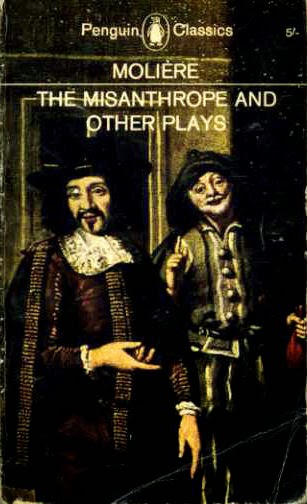
Tartuffe — Molière

I have such a vivid memory of reading this for the first time at around age 20. I was sitting on the back steps of my family home reading this and laughing out loud again and again. I was struck by the savagery of the satire and delighted by Molière's uncompromising attack on hypocrisy. (I think I already found this the most routinely amusing of human qualities). But moreover, I was conscious at the time of the humour crossing time, space, and language (I was reading in translation). I was new to Molière and what a joyful discovery this was!

The Time Traveler's Wife — Audrey Niffenegger

I started this list with tragic love story and I finish with the same. No book has ever made me weep like this book made me weep. I love it for the brilliance of its premise, and its ability to manipulate my emotions so thoroughly and completely. I read it not long after it was published, so it's been with me ten years. I've not yet re-read it, because I'm a little fearful of its dark magic!

Honourable mention

Growing up before video recorders were common in Australian homes, I re-lived favourite movie and TV experiences through the novels that inspired them, or which were published as novelisations afterwards. Three paperbacks that I read over and over again until they literally disintegrated were Peter Benchley's Jaws (I don't like the ocean for a number of reasons, and this is one of them) William Peter Blatty's The Exorcist and Alan Dean Foster's novelisation of Star Wars (writing under George Lucas' name) -- the first line of this is sheer poetry: "It was a vast, shining globe and it cast a light of lambent topaz into space—but it was not a sun."

I also wished I could have included The Silmarillion. Probably Chariots of the Gods? too. Oh, and James Blish's original Star Trek novel, Spock Must Die!

Future candidates

If I were to do this exercise again in a few years, I would fully expect Cormac McCarthy's The Road and Samuel Delaney's Dahlgren to be on this list too. But I need to let my experiences of them seep into memory first.

Monday, 25 August 2014

The problem of Doctor Who: Deep Breath and its Tyrannosaurus

So today, I was extremely happy to get along to one of the cinema screenings of the new Doctor Who season opener, “Deep Breath”, which also of course introduces Peter Capaldi as the 12th 13th 14th whateverth Doctor.

I enjoyed it! I found the story was mostly forgettable, but that’s normal for a new Doctor’s introduction, where the focus is very definitely on the character. (Doctor Who is a series with a mild, recurring case of pilotitis) The real joy was watching Capaldi’s interpretation of this much-beloved character. Anyway, I digress.

One thing bothered me, though: the size of the Tyrannosaurus. I had no real idea of how big the clock tower of Westminster Palace (popularly, though inaccurately known as “Big Ben”) is, but I knew it had to be much bigger than it appears to be beside the Tyrannosaurus stomping around beside it. When I got home, I looked it up, and the tower is quite huge—96 metres high!

Yet shots like these make it clear that the dinosaur is meant to be very nearly as tall as the clock tower, and the multiple angles and directions confirm that this is not just a trick of perspective, but that this is the intended size:


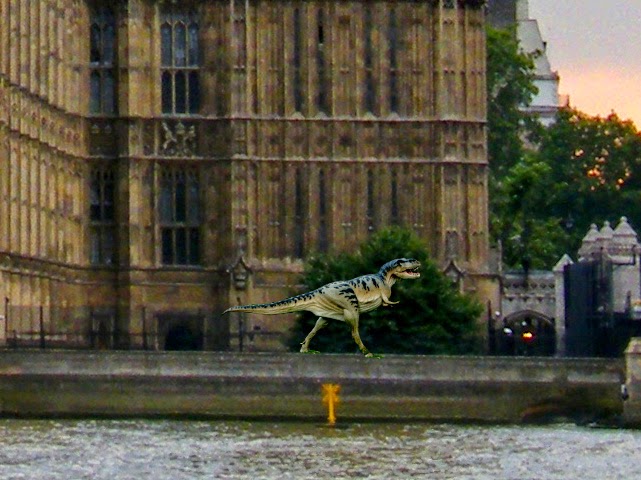
Now, an adult Tyrannosaurus was only about 4 metres tall at the hip, so really, to be in proper scale, it would have to look more like this:


Can’t see it? It’s just about almost as tall as the clump of greenery there at the base of the tower:


So really, a very very long way away from what was depicted on screen!

As a final note, the last time Doctor Who depicted a Tyrannosaurus loose in London was in 1974’s serial “Invasion of the Dinosaurs”. Here’s what it looked like back then:


There’s obviously no contest in realism here (or in accuracy—we know so much more about these animals now than we did forty years ago!)

However—and this is the important point—notice that the 1974 Tyrannosaurus is depicted around about the right size! If anything, it looks very slightly too small for an adult, maybe around 3 metres at the hip. So perhaps this one was a juvenile?


All images from Doctor Who are copyright BBC. I assert that my use here is fair dealing for the purposes of criticism and review.

My composite images of the correctly-scaled Tyrannosaurus against the clock tower are made from an image of the clock tower by Adriano Aurelio (via Wikimedia Commons under a Creative Commons CC-BY 2.0 licence) and an image of a model Tyrannosaurus by User Pibwl (via Wikimedia Commons under a CC-BY-SA 3.0 licence). I release this composite image under a CC-BY-SA 3.0 licence.